


Chief Editor
(NSB)
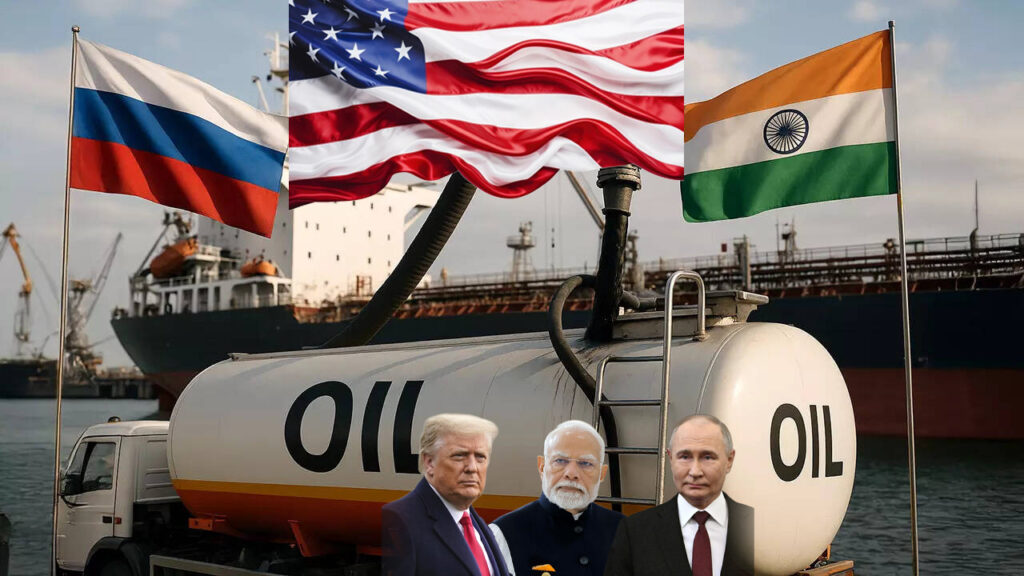
In recent weeks, a narrative has been circulating widely on social media claiming that the Indian government, under Prime Minister Narendra Modi, has “sold out” to the United States because Washington supposedly “granted permission” to India to purchase Russian oil. The claim is often framed dramatically: that America now dictates India’s energy policy and that India can only buy Russian oil because the United States “allowed” it.
This claim is not only misleading but also reflects a fundamental misunderstanding of how global energy markets, sanctions regimes, and geopolitical strategy actually function.
The Core Misconception
The rumour stems from the misinterpretation of a 30-day waiver known as General License 133, issued by the U.S. Department of Treasury’s Office of Foreign Assets Control (OFAC). On social media, this license has been portrayed as the United States granting India permission to buy Russian oil.
In reality, the license has nothing to do with giving India permission. India does not require authorization from Washington to conduct trade with any country. The license was issued for American and Western shipping and insurance companies, not for sovereign nations purchasing oil.
Understanding this requires looking at the broader geopolitical and economic context that emerged after the Russia-Ukraine war.
The Global Oil Shock After the Russia-Ukraine War
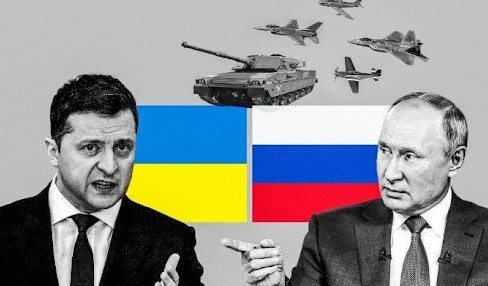
When the Russia-Ukraine conflict escalated in 2022, the United States and the European Union imposed sweeping sanctions on Russia. European nations declared they would reduce or eliminate their dependence on Russian energy, arguing that purchasing Russian oil would indirectly finance the war.
However, the global oil market is deeply interconnected. Russia is one of the world’s largest oil exporters, and a sudden halt in its exports would have triggered severe supply shortages and driven global energy prices to extreme levels. Such a shock would not only have hurt developing economies but also severely impacted Western economies themselves.
To avoid this outcome, the G7 nations introduced the Russian Oil Price Cap Mechanism. The idea was strategic: allow Russian oil to continue flowing into global markets while limiting the revenue Russia could earn from it.
Under this system, Western companies involved in shipping, financing, or insuring Russian oil cargoes could only participate if the oil was sold below a certain price threshold. This mechanism attempted to strike a balance between maintaining global supply and constraining Russian profits.
India and China’s Strategic Energy Purchases
As Europe moved away from direct Russian crude imports, Russia naturally looked for alternative buyers. Asian economies—particularly India and China—became major destinations for discounted Russian crude.
India, which imports more than 80 percent of its crude oil requirements, approached the situation from a pragmatic economic perspective. Russian crude was offered at substantial discounts compared to global benchmark prices, making it an attractive option for Indian refiners.
Indian refineries purchased the crude, processed it domestically, and exported refined petroleum products such as diesel and aviation fuel to global markets—including Europe. Since the exported products were refined in India, they were no longer classified as Russian crude under international trade norms.
This dynamic created what some analysts describe as a “refinement loophole”, though it is entirely legal within the framework of global trade rules. European countries, while avoiding direct purchases of Russian crude, continued buying refined fuels produced from that same oil once it had been processed elsewhere.
What the 30-Day U.S. License Actually Means
The 30-day General License 133 issued by OFAC has been widely misunderstood. The sanctions regime imposed by the United States and its allies prevented Western shipping, insurance, and financial services firms from participating in Russian oil transport unless strict conditions were met.
This created a situation where Western maritime and insurance companies were losing business in global energy trade.
The temporary license was designed primarily to allow these Western companies to re-engage in specific transactions related to Russian oil shipments for a limited period, particularly during moments of supply instability in global energy markets.
In other words, the waiver was issued to stabilize supply chains and prevent disruptions in global oil transportation—not to grant India or any other country permission to purchase oil.
India’s Energy Sovereignty
India has consistently maintained a clear and pragmatic position on energy procurement. As the world’s third-largest oil consumer, the country must secure affordable energy supplies to support its economic growth and protect domestic consumers from price shocks.
Indian policymakers have repeatedly stated that India will buy oil from wherever it is most economically viable, whether that supplier is in the Middle East, Russia, the United States, or elsewhere.
This approach is not unique to India; it is standard practice for most large energy-importing economies.
Political Rhetoric vs. Policy Reality
From time to time, political statements from leaders in different countries—such as remarks suggesting that the United States “forced” India to reduce Russian oil purchases—are often aimed at domestic audiences rather than reflecting actual policy decisions.
Such rhetoric is common in international politics, particularly during election cycles or geopolitical negotiations.
However, official data from global energy markets continues to show that India remains one of the largest buyers of Russian crude oil, and Russia itself has repeatedly acknowledged India as a key energy partner.
Separating Narrative from Reality
The claim that the United States “allowed” India to buy Russian oil collapses under scrutiny. The 30-day license was designed for Western companies operating under U.S. sanctions law, not for sovereign countries making independent trade decisions.
India’s energy policy remains guided by national economic interests and market realities, not by permissions from foreign governments.
In an era where geopolitical narratives spread rapidly through social media, understanding the complex interplay between sanctions, global supply chains, and energy markets is more important than ever. Simplistic claims may generate headlines, but the real story is far more nuanced—and far less sensational.