
By NSB.News
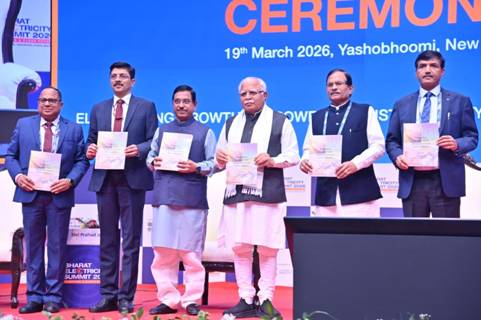
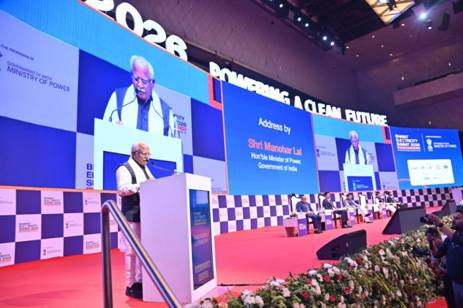
The inaugural edition of the Bharat Electricity Summit 2026, billed as India’s largest electricity-focused exhibition and conference, commenced at Yashobhoomi in New Delhi. The four-day global event was inaugurated by Union Minister Manohar Lal Khattar, alongside key leaders including Pralhad Joshi, Shripad Naik, Pankaj Agarwal, and Ghanshyam Prasad.
Key Highlights and Announcements
During the summit, the Ministry of Power released two major strategic reports:
- National Resource Adequacy Plan, outlining India’s roadmap to meet rising electricity demand through a balanced energy mix.
- Transmission Plan for Integration of 900+ GW Non-Fossil Capacity by 2035-36, detailing infrastructure expansion to support renewable energy growth.
The transmission blueprint includes:
- Development of 1,37,500 circuit kilometers of transmission lines
- Creation of 8,27,600 MVA substation capacity
- Estimated investment of ₹7.93 lakh crore
India’s Energy Transformation
In his keynote address, Manohar Lal highlighted India’s rapid progress in the power sector, including:
- Achieving 50% non-fossil fuel electricity capacity nearly five years ahead of its climate commitments
- Expansion of transmission infrastructure by 72%, reaching over 5 lakh circuit kilometers
- Meeting a peak demand of 250 GW in 2024-25, with readiness for 270 GW and beyond
He also emphasized India’s ambition to become a global exporter of affordable energy, supported by initiatives such as cross-border electricity trade and undersea transmission networks.
Renewable Energy Growth
Minister Pralhad Joshi stressed that while thermal power remains essential, renewable energy is the only sustainable long-term path. Meanwhile, Shripad Naik noted that India’s solar capacity has surged dramatically from 2.8 GW to over 143 GW, reflecting rapid clean energy adoption.
The transition is increasingly participative:
- Over 32 lakh households and 23 lakh farmers are contributing to clean energy generation
Strengthening Infrastructure and Innovation
Pankaj Agarwal highlighted that India now operates one of the world’s largest synchronized power grids, backed by:
- Advanced grid balancing systems
- Large-scale smart meter deployment
- Strong policy frameworks
He described India’s power sector transformation as a global model, driven by scale, innovation, and policy clarity.
A Global Platform for Energy Collaboration
The summit is expected to host:
- 100+ conference sessions
- 300+ speakers
- Participants from 80+ countries
- 500+ exhibitors, including over 100 startups
- More than 25,000 visitors
Positioned as a major international platform, the event underscores India’s focus on innovation, affordability, and global collaboration as it advances toward its goal of becoming a developed nation by 2047.